Author Archive Randy Bilesky BsF CPA RPF

ByRandy Bilesky BsF CPA RPF

Cool Facts about Bees, Wasps and Flies

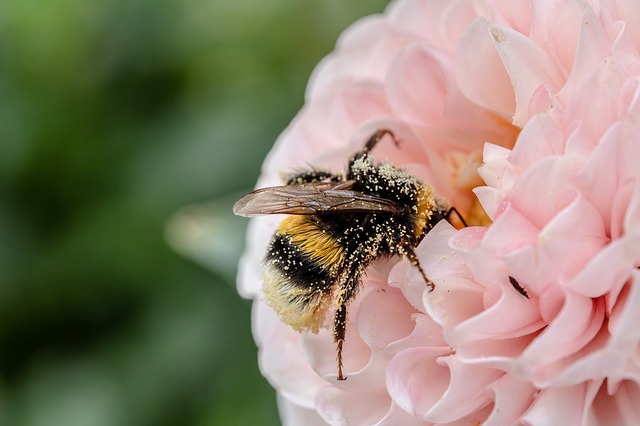
While gathering food, a bee may fly up to 100 km per day. A honeybee colony can produce around 100 kg of honey each year. Honeybees make around  9 million trips to gather enough nectar for production of ½ a kg of honey. Hornets and wasps feeding on fermenting juice have been known to get “drunk’ and pass out. A wasp’s wings beat over 200 times a second. Houseflies find sugar with their feet which are 1 million times more complex than human tongues. Fruit flies were the first living creatures to be sent into space and they do push-ups to attract a mate.

Cool Facts about Bees, Wasps and Flies

https://www.linkedin.com/pulse/cool-facts-bees-wasps-flies-randy-bilesky/?published=t

ByRandy Bilesky BsF CPA RPF

Third Murder Hornet nest of 2021 found near Delta

A third murder hornet nest was eradicated after a hornet was tracked to a
tree neither the Canadian US border. They discovered as many as 1,400
hornets in nine layers of comb, where hornets were found in various
developmental stages. Murder hornets considered to be invasive species and
are the largest hornets in the world, measuring up to 5 cm. They got their
moniker for being the cause of dozens of deaths per year in Japan. Asian
giant hornets have mandibles shaped like spiked shark fins and in their
“slaughter phase” they attack bee hives, decapitate the bees and flying away
with the thoraxes to feed their young. The hornet’s also have potent venom
and stinger that is  long enough to puncture a beekeeping suit.

ByRandy Bilesky BsF CPA RPF

How to Get Rid of Wasps and Hornets in September

As temperatures consistently exceed of 23 degrees, you may be seeing an increased presence of wasps and hornets in Delta during the late summer and early fall. Here are a few basic steps to get rid of those insects. While there’s not a specific silver bullet to altogether remove wasps and hornets on your property, here are a few practical steps you can take to prevent a run-in with the venomous stinging pests. Always cover sweet beverages like soda and juice when you are outdoors, garbage cans that are outside should have a tight-fitting lids and clean out accumulated grease in your BBQ. Make sure your windows and door screens are sufficiently sealed. Since wasp and hornet live in nests that can hold around 2,000, it’s not enough to kill only a few to get rid of the nest, so skip the retail counter when looking for a cure to your stinging friends and call a pro. BTW, don’t use bleach, ammonia or gas as these are extremely dangerous and you may just push the nest deeper into your home.

ByRandy Bilesky BsF CPA RPF

Attention, Hornets and Wasps coming!

Spring and summer is stinging season, as the temperature increases, so does aggressive and territorial stinging insects. Here is what you need to know about them.  

First, hornets are social wasps that build their nests anywhere and everywhere in all kinds of different shapes. They are very aggressive if they feel that their nest is in danger -so stay away and avoid making loud noises that will make them emerge and attack. Next, Paper wasps have nests that hang downward and can look like honeycomb pattern usually under a house’s soffits. They are less aggressive but can be hostile if you get too close to their nest. Finally, Yellowjacket, the unprovoked stinging insect most likely to show up at your picnic or barbecue, they are drawn by sugar. They created their nests in attics or soffits or underground and can have thousands of wasps per nest. So what do you do if stung by one or many of these insects, apply ice, use hydrocortisone cream,  take a antihistamine for swelling and a aspirin for pain.

ByRandy Bilesky BsF CPA RPF

Chafer beetle, Grubs and Your Yard

Delta lawns are about to be decimated by birds and animals desperately digging for chafer beetle grubs. Damage is done during the grub, or larvae, stage. The grubs feed on the fibrous roots of grass, which crows, raccoons and skunks quickly rip up each spring and fall in search of the tasty pests. Water is key to controlling grubs without pesticides. Microscopic round worms, known as nematodes, are the most effective defence against the chafer beetle. Nematodes—available at garden supply stores—are applied to infested lawns at the end of July when the beetle is beginning its grub stage. Effective treatment involves two weeks of regular watering.

Tips to control chafers

•Increase mowing height to 8-10 cm

•Fertilize twice a year with compost or organic, slow-release fertilizers; leave grass clippings on lawn as natural fertilizer

•Water lawn deeply: 2-3 cm once a week

•Over-seed annually

•Lime in fall and spring Delta

Chafer beetle, Grubs and Your Yard

gogreenpestcontrol.ca insectandrodentexterminators.com Delta Ladner Tsawwassen B.C., Randy Bilesky BsF CPA RPF

https://www.linkedin.com/pulse/chafer-beetle-grubs-your-yard-randy-bilesky/?published=t

ByRandy Bilesky BsF CPA RPF

Pesticides and Pollinators

A. Avoid applying pesticides to blooming plants, or when conditions favor drift into areas with plants in bloom.

B. If you must spray plants in bloom, select a pesticide that is less toxic to bees (e.g. Bt, insecticidal soap, summer spray oil). Spot spray when possible to limit pesticide exposure risks

C. Apply pesticides only after flower petals have fallen, when plants are less attractive to bees. This will reduce the risk to bees coming in contact with pesticides.

D. Select pesticide formulations carefully to reduce risk. Dust (D), wettable powder (WP), flowable (F) and other formulations that leave visible powdery residues on plants are picked up by bees more easily than emulsifiable (EC) or soluble concentrate (SC) formulation. Follow any specific pesticide label requirements to protect bees.

E. Follow any specific pesticide label requirements to protect bees.

F. Read the package label to see if the pesticide contains a neonicotinoid insecticide with these active ingredients: clothianidin, dinotefuran, imidacloprid or thiamethoxam. Use these products after flower petals have fallen because they may be highly toxic to bees for several days after application.

G. Avoid applying these neonicotinoid insecticides by soil drench or tree injection methods to plants known to attract bees. These methods may contaminate nectar and pollen for some time after treatment.

H. If you must use a soil drench or tree injection to apply these neonicotinoid insecticides, do it after flower petals have fallen and use the lowest possible effective dosage to help reduce the risk to bees. Also, try to select an insecticide that offers the shortest persistence in ornamental plants while still controlling the pest.

Pesticides and Pollinators

gogreenpestcontrol.ca insectandrodentexterminators.com Ladner Tsawwassen. Delta. Randy Bilesky CPA RPF BsF

https://www.linkedin.com/pulse/pesticides-pollinators-randy-bilesky/?published=t

ByRandy Bilesky BsF CPA RPF

Pest Exclusion

Preventative work keeps pests out and exclusion work is the key to keeping pest like raccoons to ants out of your home. Exclusionary work seals up all the areas of your home that pests get inside. Mice, rats, and squirrels are the common pests that require exclusionary work. Mice can enter through holes as narrow as 6mm and rats 12mm. Rodents can carry 61 diseases in their urine, feces, and fur, as well as pathogens that can trigger allergies. Wildlife such as raccoons and skunks get under house foundations, porches, decks, and sheds. They like the quieter areas.


Pest Exclusion

gogreenpestcontrol.ca insectandrodentexterminators.com Delta Ladner Tsawwassen B.C., Randy Bilesky BsF CPA RPF

https://www.linkedin.com/pulse/pest-exclusion-randy-bilesky/?published=t

ByRandy Bilesky BsF CPA RPF

Carpenter Ant, Again !

Carpenter ants destroy the wood in your house. A colony in your yard can have multiple satellite nests in your house, causing significant structural damage to the integrity of your house. Carpenter ants create nest in wet and moldy wood. This is why repairing any water damaged wood will help to keep the ants out. They enter buildings through cracks in exterior walls or the foundation where wires, plumbing, cable, and telephone lines enter the home. The obvious sign of an infestation is seeing carpenter ants crawling on the foundation of the house, small exit holes in siding, sawdust piles, and ants inside the home. They characteristically will travel far from their nest to forage for food.


Carpenter Ant, Again !

gogreenpestcontrol.ca insectandrodentexterminators.com Delta Ladner Tsawwassen B.C., Randy Bilesky BsF CPA RPF

https://www.linkedin.com/pulse/carpenter-ant-again-randy-bilesky/?published=t

ByRandy Bilesky BsF CPA RPF

Spring – Finally the mice will leave my home, right?

Kicking the mice out of your house can be challenging mission. After living indoors in the winter where its warm with plenty of food or water, why would they want to leave.  Mice like to hide in attics, walls, crawl spaces, behind cabinets, air vents, and insulation. Check these locations for any signs of mouse activity is important to prevent any future and keeping them out. You may not realize it but there really isn’t a drawer, cabinet or pantry they can’t get into. Keeping your house clean and vacuuming a lot is critical.  Like all animal, mice need water so look around your house, inside and out, for leaky faucets or pipes. Mice are all about opportunities so don’t give them any.

Spring – Finally the mice will leave my home, right?

https://gogreenpestcontrol.ca/spring-finally-t…ve-my-home-right/

gogreenpestcontrol.ca insectandrodentexterminators.com Delta Ladner Tsawwassen, Randy Bilesky BsF CPA RPF

https://www.linkedin.com/pulse/spring-finally-mice-leave-my-home-right-randy-bilesky/?published=t